

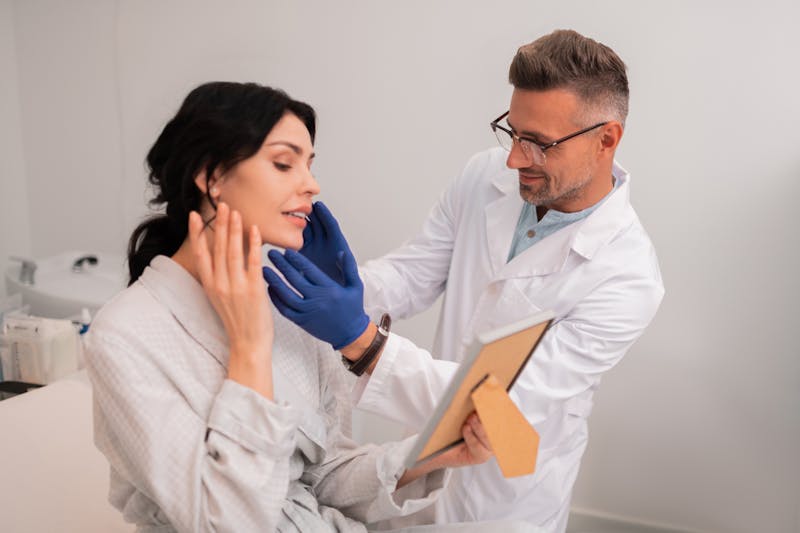
The Bay Area is home to dozens of practitioners offering plastic and cosmetic procedures, and not all of them bring the same level of training, expertise, or ethics to the table. When you first start searching, you might be overwhelmed with information, but focus on board certification, fellowship training, and hospital privileges to ensure an optimal experience.
Dr. Jerome Liu and Dr. Tom Liu are board-certified plastic surgeons, fellowship-trained aesthetic specialists, and active members of both the American Society of Plastic Surgeons and the American Society for Aesthetic Plastic Surgery. They have spent their careers not only performing procedures at the highest level, but also guiding patients who came to them after experiences with less-qualified providers.
This guide draws directly on that expertise. Whether you're considering breast augmentation, a facelift, rhinoplasty, or any other aesthetic procedure, these seven steps will help you evaluate any surgeon in the San Jose area with the confidence and clarity you deserve.
Step 1: Verify Board Certification
Board certification is the single most important credential to confirm, but it comes with a critical caveat: not all certifications are equal.
The gold standard in plastic surgery is certification by the American Board of Plastic Surgery (ABPS), which is the only board recognized by the American Board of Medical Specialties (ABMS) for plastic surgery. To earn it, a surgeon must complete:
- An accredited plastic surgery residency program
- A minimum number of directly supervised procedures
- Both written and oral board examinations
"Board-certified cosmetic surgeon" is a phrase you may encounter, but it is not the same credential. Cosmetic surgery is not a specialty recognized by the ABMS, meaning the training requirements vary widely among those who use that title.
Before moving forward with any surgeon, verify their ABPS certification directly through the ABMS database or the ABPS website.
Step 2: Look for Fellowship Training in Aesthetic Surgery
After completing a plastic surgery residency, some surgeons choose to pursue an additional year or more of subspecialty fellowship training focused specifically on aesthetic surgery to refine their skills under the mentorship of the field's leading practitioners.
Fellowship training is not required to practice, which is precisely why it matters. It represents a surgeon's voluntary commitment to achieving the highest level of aesthetic outcomes.
When researching any San Jose plastic surgeon, ask:
- Did you complete a fellowship in aesthetic surgery?
- Where, and under whom?
Step 3: Review Their Before-and-After Portfolio With a Critical Eye
A surgeon's portfolio is one of the most revealing indicators of their aesthetic sensibility. When evaluating before-and-after photos, look for:
- Patients with anatomy similar to your own: Body type, skin type, and starting point all affect outcomes; results achieved on one patient may not translate directly to another.
- Natural, proportional outcomes: You’re looking for results that look like the best version of the patient, not a departure from them.
- Range and variety paired with consistency across cases: A confident surgeon shares a full spectrum of cases, not only their showiest work.
It is also worth asking whether the photos shown are of the surgeon's own patients. Manufacturer-supplied images are sometimes used in place of actual results; you deserve to see the work of the person who will be operating on you.
Step 4: Confirm Hospital Privileges
Hospital privileges are an often-overlooked yet meaningful vetting criterion. To operate in an accredited hospital, a surgeon must be independently credentialed by that institution's medical staff.
This review goes well beyond self-reported credentials, examining:
- The surgeon's training and educational background
- Their documented procedural experience and patient outcomes
- Their professional standing and ethics record
A surgeon who holds privileges at respected facilities has, in effect, passed an external quality review. While many aesthetic procedures are safely performed in accredited outpatient surgery centers, it is always worth asking which hospitals they are privileged to operate in.
Step 5: Check for Membership in ASPS and ASAPS
Professional memberships in the American Society of Plastic Surgeons (ASPS) and the American Society for Aesthetic Plastic Surgery (ASAPS) are meaningful differentiators, not simply letters after a name.
Both require ABPS board certification for full membership and hold members to ongoing standards in ethics and continuing education:
- ASPS is the world's largest plastic surgery organization, representing board-certified surgeons across all areas of plastic and reconstructive surgery
- ASAPS is dedicated exclusively to aesthetic surgery and represents surgeons who have demonstrated a sustained commitment to the field, making membership a signal of both qualification and focus
Step 6: Read Patient Reviews, But Know What to Look For
When reading reviews for any San Jose plastic surgeon, look for patterns rather than individual data points:
Do patients describe feeling heard, unhurried, and respected during consultations?
Is the surgeon praised for communication and attentiveness throughout recovery, not just on the day of surgery?
How were concerns or complications handled, and were patients left feeling supported?
A tip: A sustained volume of detailed, specific reviews over time is a stronger signal than a sudden cluster of brief ones.
Step 7: Evaluate the Consultation Experience Itself
A consultation worth your time should leave you feeling informed and respected. Look for:
- Undivided attention from the surgeon themselves, not a rushed overview delegated to staff
- An honest assessment of what is and isn't right for your anatomy and goals, even when that means tempering expectations
- Space for questions without any pressure toward an immediate decision
- An unbiased recommendation driven by your long-term result, not a booking made today
Be cautious of consultations that feel more like sales presentations than medical conversations. Trust your instincts: the quality of this first conversation is a reliable preview of the care that follows.
How SVIA® Stacks Up
Dr. Jerome Liu and Dr. Tom Liu have built their practice around the standard this guide describes:
- Board Certification: Both surgeons are certified by the American Board of Plastic Surgery, the only ABMS-recognized board for plastic surgery.
- Fellowship Training: Both completed aesthetic surgery fellowships; Dr. Jerome Liu at the Dallas Plastic Surgery Institute, and Dr. Tom Liu at the CPMC-Davies Aesthetic Surgery Institute and the Buncke Clinic.
- Before-and-After Portfolio: Real patient results available for review at your consultation, reflecting natural, consistent outcomes across a full range of procedures and anatomies.
- Hospital Privileges: Dr. Jerome Liu holds privileges at Good Samaritan, El Camino, and Mills Peninsula. Dr. Tom Liu holds privileges at Good Samaritan, El Camino, and California Pacific Medical Centers.
- Professional Memberships: Both are active members of ASPS and ASAPS.
- Patient Reviews: More than 718 reviews averaging 4.7 stars across our Los Gatos, San Mateo, and Sacramento locations.
- The Consultation Experience: Every appointment at SVIA® includes TouchMD interactive technology, the surgeons' personal and undivided attention, and an honest, no-pressure evaluation built entirely around your goals.
We’re happy to help you choose the perfect San Jose Plastic Surgeon for you. Contact us today to book your consultation.